The Art of Superstition
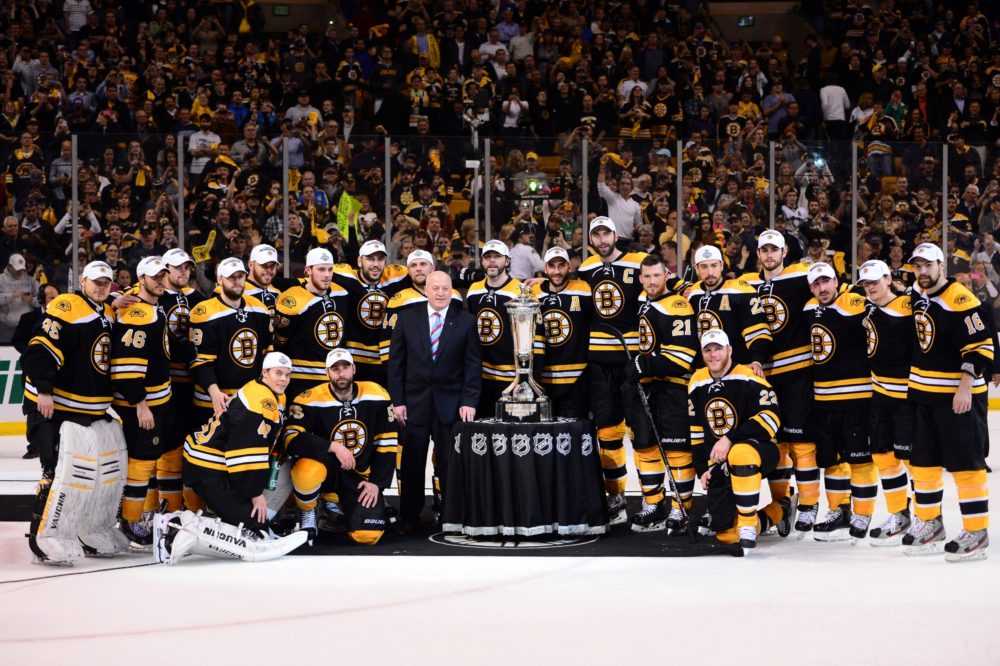
Growing up, I was a hockey fanatic. I did my best to follow some of my favorite players and apply some of their everyday habits to my game. During this time, I discovered the popular phenomena around many NHL locker rooms influencing some of the greats of our generation, the art of superstition. At first, I was a little bit unsure at what exactly a superstition was, but of course as curious as a little boy loving hockey could be, I wanted to do more. There seems to be a negative atmosphere around sport superstitions, for the simple fact that people believe that they are non-sense and have no advantage whatsoever on performance. The most famous and most recognized across the hockey world is that of not touching the Clarence S. Campbell Bowl or the Prince of Wales which are awarded when teams from respective conferences reach the Stanley Cup Final. Before diving into all of the amazing aspects and little trickle-down effects a superstition has, it is very important to define exactly what the term, superstition means and clear up any nuances.
Firstly, the difference between a ritual and a superstition. A ritual is defined as “a certain behavior or action that a sports performer carries out with the belief that these behaviors have a specific purpose, or power, to influence their performance” (Blackwell, 1). For instance, eating carbohydrates the morning of the game because it will provide long term energy. Whereas a superstition is defined as “something that is initially developed in hindsight, almost by accident and then becomes required in future events” (Blackwell, 1). Some examples may include, listening to a specific song while making breakfast before game day, because that specific song made the team win last game.
Although I am a firm believer that superstitions are in fact effective and important, I do admit that they are somewhat bizarre [in some instances like the one I just presented]. Upon researching, I questioned whether it could be classified as an obsessive-compulsive disorder or [commonly known as an] OCD. An OCD is in fact a serious health problem, according to the National Center for Biotechnology Information, and is a serious mental disease that needs to be treated by medical professionals. This is not so much the case with a superstition as it is not exactly in matter of serious illness but rather used as a means to benefit physical and mental performance on the side of a sports game. I would want this to be clarified as all though some may joke on the fact that people with them can be considered to have an OCD, this is not the case as it is a mental health disease that should not be taken lightly. I believe that in many cases they may be extreme, and that it can annoy others however there is not enough to classify it as such. One of my personal favorites is the game of rock paper scissor between Tyler Seguin and Mark Scheifele when the Stars and the Jets clash to decide who is the last person to get off the ice. Scheifele even went on to say that “that’s the fun part of hockey” and I couldn’t agree more (Close 2).
Now let’s get into the meat of this, the effect of the superstition. They are real, and they are prevalent in the hockey world and really in the sports world. The University of North Dakota recently did a study that tried to find some kind of correlation with confidence and how one affected the other. It turns out that there is in fact a link between the two and superstitions account for approximately 10% of the confidence an athlete has going into a game (Ptacek 34). While this may seem like a miniscule amount, I like to think of it as an athlete would not be able to go into a game with maximum confidence but rather would feel like he missed something he had to during his routine. This would perhaps tie into the fact that the player would not be able to give 110%, as the cliché goes. This 10% confidence is also based on a certain set of athletes and thus does not necessarily accurately represent the confidence it may provide on an athlete to athlete basis, [nonetheless very difficult to place a percentage on the performance of an athlete].
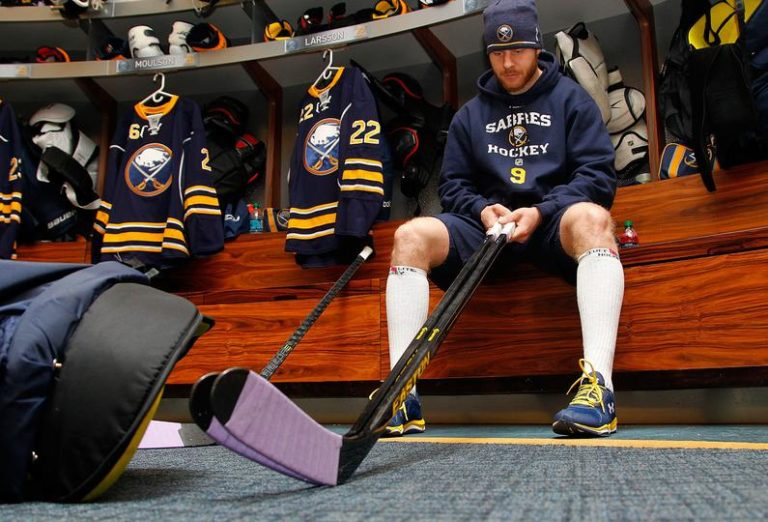
Going further into the research, lucky charms were found to have the greatest effect on players when talking about superstitions and was something that was quite interesting (Ptacek 33-35). One notorious example of a lucky charm related in the hockey world is Sidney Crosby’s jockstrap which he’s had since his minor hockey days, and while some may have gagged at this mere thought, I find it cool from a hockey player’s standpoint! Continuing with the “Sid the Kid” Crosby, he had something iconic to say and was something I marveled at. Crosby is notorious to have numerous superstitions like taking the long way into the arena that would allow him to avoid walking by the visiting team’s locker room. During a featured series from the NHL called the Road to the Winter Classic, he described his superstitions and said, there’s probably a few that are borderline crazy, but I guess we’re all crazy in our own way” (Jens95) with the smile almost as if shy to admit such powerful words. Aside from the goosebumps Sid gave, if one of the best NHL players to ever player is such a big ambassador of them, then I’m sure they hold at least some importance in the hockey world. There will be some more interesting superstitions discussed later that may be even more peculiar then the one’s Sid has, but he is one of the founding fathers in establishing them publicly over the last decade or so. It is also important to recognize that “athletes must be careful that they do not become too preoccupied with their superstitions, as the use of too many can become detrimental to their game” (del Rosario 67). This is also very important, as even though I am one of the biggest advocate, it is crucial that hockey players do not get too distracted in fulfilling their superstitions.
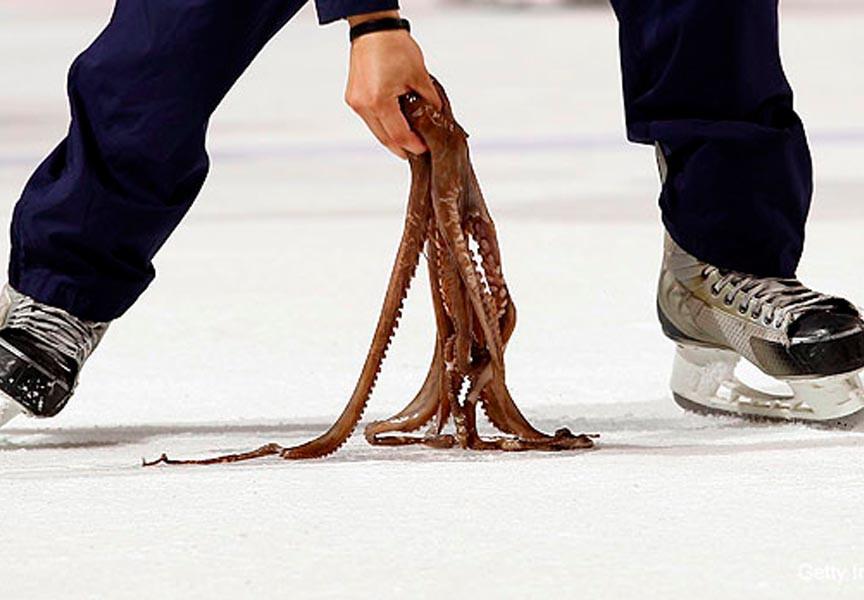
Moving onto how exactly they are received around the hockey dressing rooms? This is a little bit of a complicated topic, as most players will almost be reluctant on giving what their superstitions are because they feel that perhaps it may lose the so-called magic it provides if they divulge their secrets. They are in fact personal and are more valuable from player to player but the general rule with them, is to not mess with them. When you mess with a player’s superstitions like say moving their hockey sticks around when you know they like them in a certain place. This can cause a pretty big conflict between teammates and is better to be left alone, because you don’t want to be messing with them. This highlights to me just how important these superstitions are to certain players and how much it can impact their performance. This is how the individual feels about the superstition, but what about the effect it has on the overall dynamic of the hockey locker room as a whole? Turns out, that superstitions can be sometimes annoying as it’s almost like the guys with the really extreme one’s are constantly making others cautious to not mess with their superstitions. There are some that are not disruptive to teammates not matter how weird they may be, even if it’s former player Jeff Halpern leaving his skates in a fridge before the game (Close 3).
Lastly, I feel like showing off their personality is something NHL players are limited to because of some of the older hockey minds and mentalities and how professional they claim the sport to be. Evander Kane is a big advocate of this as he recently expressed his thoughts on this, claiming players should be able to express themselves a little more and market themselves better. I couldn’t agree more with his statements and I feel like these cool superstitions can be a kind of gateway for this to happen. This relates back to the game of rock paper scissors between Seguin and Scheifele, when thinking of a little kid watching the game and perhaps being a fan of the Stars or the Jets or even any other team, and just seeing the interaction between these two is really just tremendous. In all honesty the list of superstitions around the NHL locker rooms are quite exhaustive like Ovi’s “carb-powered Italian combo” (Close 2) or the classic chicken and pasta pregame meal amongst players (Close 1-3).
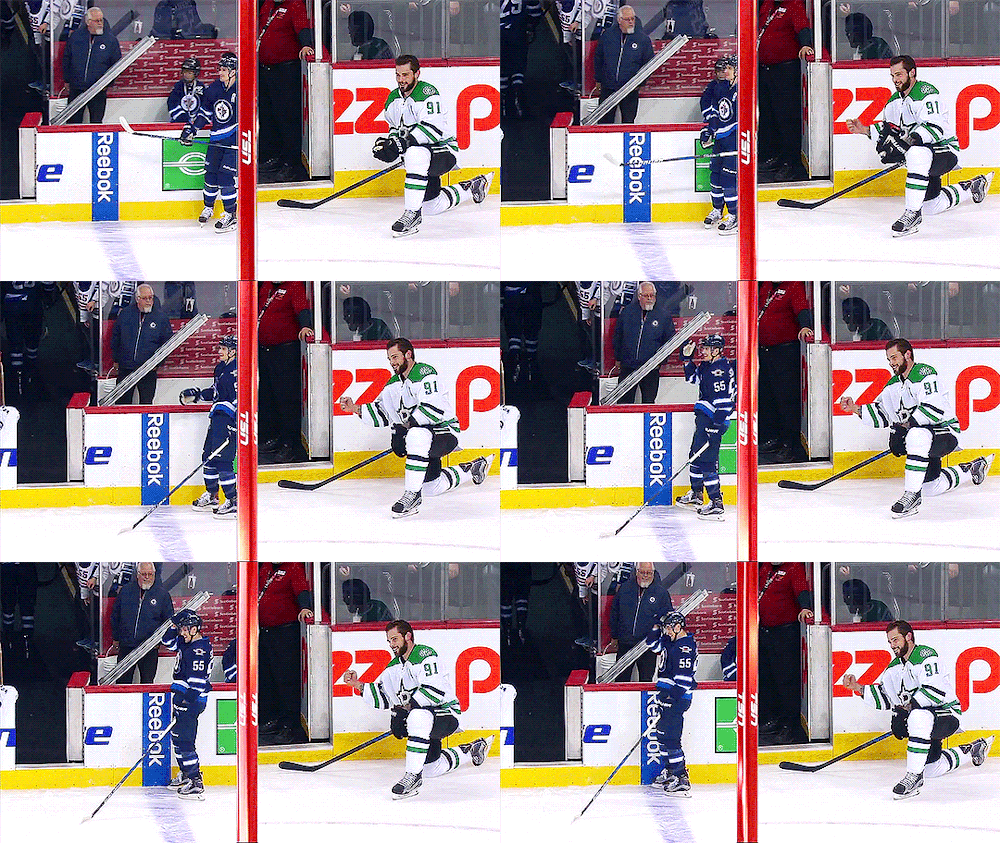
Superstitions are vital to some of the world’s best hockey players to ever play the game and as well as numerous other athletes. This is needless to say that they serve a purpose within the hockey world and must be recognized. There is a special connection that can be made between fans and players when brought together by superstitions. I like to paint a vivid picture when it comes to this, I imagine a little boy or girl who is a die-hard hockey fan who can only make the trip to see his favorite player play hockey and I can just see him with that magical smile on his face when he finally gets to see Tyler Seguin wheeling a quick game of rock paper scissor with Scheifele as he/she has seen so many times on TV. That bond that can be created is something spectacular and will be remembered forever by the child. As players begin to become more and more comfortable with the media and they are able to express their personalities more, superstitions will also be at the forefront of it all.
Works Cited
Blackwell, Liam. “The Power of Superstitions and Rituals In Sport” believeperform. 2010. https://believeperform.com/the-power-of-superstitions-and-rituals-in-sport/ Accessed May 5th, 2020.
Clinton, Jared. “The NHL’s 10 Weirdest Rituals and Superstitions” The Hockey News. February 13th, 2015. https://thehockeynews.com/news/article/the-nhls-10-weirdest-rituals-and-superstitions Accessed May 5th, 2020.
Del Rosario, Danyel. “Superstition in Sport: A Phenomenological Study” Ithaca college Digital Commons. December 2017. https://digitalcommons.ithaca.edu/cgi/viewcontent.cgi?article=1391&context=ic_theses Accessed May 5th, 2020.
Feature on Sportsnet. Found on Jens95 (YouTube) August 24th, 2017. https://www.youtube.com/watch?v=DUpIGJ0olGI&t=101s Accessed May 5th, 2020.
Lack, Caleb W. “Obsessive-compulsive disorder: Evidence-based treatments and future directions for research” National Center for Biotechnology Information. December 22nd, 2012. https://www.ncbi.nlm.nih.gov/pmc/articles/PMC3782190/ Accessed March 9th, 2020.
Ptacek, Taylor Jon. “The Relationship Between Superstition and Confidence in Sport” UND Scholarly Commons. May 2016. https://commons.und.edu/cgi/viewcontent.cgi?article=1744&context=thesesAccessed May 5th, 2020.
Feature on Sportsnet. Found on Jens95 (YouTube) August 24th, 2017. https://www.youtube.com/watch?v=DUpIGJ0olGI&t=101s Accessed May 5th, 2020.
 Luca Caprio
This is definitely improved since your second draft. I like how you’ve spread the examples throughout, it makes the piece easier to read, and makes all of your points a lot more concrete. You do a better job of delving into what a superstition is and why it matters, rather than simply repeating the word like on your previous draft. Finally, you get into a really rewarding bigger picture idea: sports are about play, and fun, and personality. We care about athletes personalities perhaps more than we think we do. The superstitions add a sense of wonder and magic to the game.
A small anecdote: when I was a kid, my dad’s company had season tickets at the Forum, right behind Patrick Roy’s net. Every game, Roy would skate out 20 feet from his net, face his net, and talk to his goal posts. I used to LOVE that moment before the game when he would do that. It was such a cool thing that made me love Roy even beyond the fact that he was such a good player.
So, I get it. Your piece captures that wonder and magic really nicely. Well done.
LikeLiked by 1 person